The Cost of Being “The Tough Guy”: How Rigid Masculinity Silences, Isolates, and Hurts Men
written by Gonçalo Luz
Across generations, men have been taught a very specific image of what it means to be a man: to be strong, stoic, independent, not to cry, not to need anything, not to ask for help, to handle it alone, to never show fear. These beliefs aren’t written in textbooks. They’re absorbed in childhood, reinforced in school, magnified in media, echoed in locker rooms, rewarded across society. For centuries, these norms served men. They helped create order, identity, status, social acceptance.
The world, however, has changed. And the very norms that once promised strength and societal structure are now breaking men from the inside out. Today we face unprecedented levels of male depression, substance abuse, emotional isolation, relational breakdown, and suicide. And beneath all this suffering lies a simple truth:
Rigid, traditional masculinity norms are harming men, not because men are wrong, or because there is something inherently wrong with masculinity, but because the rules men inherited are too narrow for the complexity of contemporary life. This article explores why.

What are “Rigid/Traditional Masculinity Norms”?
When I talk about masculinity here, I am not questioning what it means to be a man, and I am surely not questioning the positive qualities that come with it. This isn’t a discussion about masculinity itself. We’re looking at the old rulebook many of us men grew up with - the narrow set of expectations about what a “real man” is, how a “real man” should act, what he should feel, and what he should keep for himself. These unspoken rules are passed down through family, school, friends, and culture, shaping boys early on and often following men into adulthood, more often than not without them even realizing it.
The Four “Rules” Boys Often Learn
Emotional Restriction: “Real men don’t cry.”
Self-Reliance: “Deal with it alone.”
Dominance/Control: “A man must always be in charge.”
Toughness: “Pain is weakness, weakness is shame.”
These norms don’t appear naturally. They’re taught through:
family (“Stop crying like a girl”)
school (“Don’t be soft”)
peers (“Don’t be a pussy”)
media (action heroes who never feel)
sports culture (“Man up”)
cultural expectations (provider, protector, rock)
Boys quickly learn what gets approval and what gets mocked. By adolescence, most have already internalized the message: Your worth depends on hiding your emotions.

The Mental-Health Fallout: Strength Turned Inward Becomes Collapse
The biggest danger of traditional masculinity norms is how they shape men’s inner worlds. Men raised on stoicism and emotional suppression often “feel less” not because they lack emotions, but because they were taught to disconnect from them.
Depression Hidden Behind Anger, Irritability, or Numbness
Research shows men are less likely to show “classic” depression symptoms (sadness, crying). Instead, male depression often presents as:
anger
irritability
emotional shutdown
restlessness
withdrawal
overworking
addiction
risky behavior
physical pain
Because these symptoms don’t “look depressed,” men go undiagnosed. A 2025 review found that men adhering to toughness and self-reliance norms were significantly less likely to seek mental-health support, even when in crisis. Another study found that men who strongly identify with the most rigid, traditional masculine ideals had a suicide risk more than twice as high. This is not a coincidence. It is a clear consequence.
Suicide Connection
We can no longer ignore the harshest data:
Men die by suicide 3-4 times more often than women across Western nations.
Yet men are far less likely to seek help before reaching crisis.
Traditional masculinity norms, especially self-reliance and emotional suppression directly predict reduced help-seeking and increased suicidality. This is not about weakness, it is about social and personal conditioning.
Substance Abuse and Self-Medication
When men can’t talk, they cope. Research consistently links rigid masculinity norms to:
higher alcohol abuse
higher drug abuse
higher compulsive behavior
escapism through work, sex, risk, or achievement
Harmful coping often appears when men don’t have better ways to manage what they feel inside. Many men drift into numbing habits simply because they were never shown better tools.
When no one teaches a boy how to soothe his own pain, how to understand what’s happening inside, or how to reach for support without shame, he grows into a man who has to improvise his way through stress, fear, and overwhelm. Without healthier skills, harmful coping easily becomes the only option that feels familiar, as the result of never having been shown another way.

Social Fallout: Relationships, Fatherhood, Brotherhood, Violence
Rigid masculinity norms don’t just harm men internally, they ripple outward, affecting families, partners, children, communities, and society.
Emotional Unavailability and Relationship Breakdown
When a man is raised to suppress emotions, this becomes his relational language. Partners describe men as:
distant
shut down
unavailable
reactive
“hard to reach”
Meanwhile, the man feels:
overwhelmed
misunderstood
ashamed
unable to communicate
alone in the relationship
Not because he doesn’t care. But because he was never taught how to care emotionally.
Intimacy Becomes Threatening
For many men, intimacy feels like stepping onto unfamiliar ground. From childhood onward, they’ve been taught, directly or indirectly, that opening up is risky, that showing emotion makes them soft, and that relying on anyone exposes them to judgment or disappointment. Over time, these lessons turn vulnerability into something dangerous rather than human. So when a partner asks for closeness, when a friend wants honesty, or when life demands emotional presence, many men feel an internal conflict: the desire to connect on one side, and the instinct to protect themselves on the other. To them, intimacy isn’t just sharing, it’s surrendering control, revealing the parts of themselves they’ve worked all their lives to hide. And in a world where they’ve been rewarded for being unshakeable, admitting fear, sadness, or uncertainty can feel like violating everything they learned about being a man. This makes closeness difficult not because they don’t want it, but because they were never shown that vulnerability and strength can coexist.
Thus:
They avoid deep conversations.
They keep secrets.
They shut down during conflict.
They struggle with emotional closeness.
They want intimacy, but their nervous system interprets it as danger.
Aggression, Rage, Violence
Emotions do not disappear when suppressed, they leak sideways. What isn’t expressed directly often shows up in irritability, withdrawal, tension, defensiveness, or sudden bursts of anger that seem to come from nowhere.
Studies show that rigid masculine norms correlate with:
higher hostility
higher aggression
higher intimate partner violence
higher risk-taking
This is unprocessed pain manifesting outward.
Collapse of Male Friendship Networks
One of the most overlooked findings is that by midlife, many men have no close friends at all. The pressures to be independent, to stay busy, and to avoid vulnerability slowly erode male friendships until many men find themselves surrounded by people, but intimately known by no one.
Traditional masculinity discourages vulnerability between men, so friendships often remain:
superficial
activity-based
emotionally distant
This leaves men without support, without community, and without a place to express what’s happening inside. The consequences are profound: A man without a brotherhood is a man in emotional isolation.

Why These Norms Persist: Identity, Shame, and Social Reward
If these norms are harmful, why do they survive? Because they do more than restrict men, they “define” them.
From a young age, boys learn that certain behaviors bring approval, respect, and belonging. When a boy acts tough, hides his tears, or pushes through pain, adults praise him. When he shows fear or softness, he risks being mocked or corrected. Over time, the message becomes clear: the safest way to be a man is to avoid anything that could be seen as weak. These patterns become part of a man’s identity long before he ever questions them.
And once a belief becomes part of a man’s identity, he will defend it, even if it quietly harms him. Rigid masculinity norms offer structure, certainty, and a sense of who he is supposed to be in the world. They promise social reward: acceptance among peers, respect in work environments, and admiration in family roles. They offer a script to follow, a way to avoid ridicule, and a way to maintain status. Letting go of that script feels like stepping into the unknown.
Rigid masculinity norms offer:
clarity
predictability
approval
status
identity
safety from ridicule
a sense of belonging
There’s also shame involved. Many men fear that if they break from the norms, if they talk about feelings, ask for support, or admit to struggling, they’ll lose the respect of others, or worse, feel ashamed of themselves. Shame is a powerful teacher, and most men learned its lessons early. So even when the old norms are exhausting, lonely, or destructive, they stay in place because the alternative feels threatening. Changing them requires confronting long-held beliefs about what it means to be strong, capable, and masculine. And that takes courage most men were never taught to access.
The truth is, these norms persist not because men want to be rigid or distant, but because they were trained to survive by performing a narrow version of manhood. Breaking that cycle means offering men something better: new models of strength, new sources of identity, and new communities that reward honesty, connection, and emotional presence rather than punishing it.
Letting go of rigid masculinity can feel like a loss of identity. For many men, their entire self-image is built on being:
the strong one
the provider
the leader
the rock
the protector
the emotionally “solid” one
But when life hits grief, divorce, financial stress, burnout, family pressure, meaninglessness, these identities crumble, leaving men without emotional tools to cope. This is where men often break, because the masculine role they were taught to play is too small for the truth of who they are.

A New Model: Healthy, Integrated Masculinity
Masculinity itself is not a problem, and it is certainly not the enemy. The qualities we often associate with healthy masculinity - strength, direction, steadiness, responsibility, courage - are deeply valuable. They help men build, protect, provide, lead, and move through the world with purpose. The issue is not masculinity, it’s the narrow, rigid version many men were taught to perform, one that leaves almost no room for the emotional or relational sides of being human.
Healthy masculinity is not about abandoning strength, it’s about expanding it. It’s strength that doesn’t require denial. Power that doesn’t need to dominate. Confidence that doesn’t silence others. It’s the kind of presence that allows a man to stand firmly in who he is while staying open to connection, love, and truth. When a man can access softness without losing his edge, when he can hold vulnerability without feeling diminished, he becomes more capable.
This is what integrated masculinity looks like: grounded in the body, clear in intention, emotionally aware, relationally alive. It’s the version of manhood that supports real intimacy, meaningful friendships, resilient leadership, and inner peace. It doesn’t confine a man to one narrow script to perform, it gives him the range to be strong and gentle, decisive and receptive, steady and expressive. It’s a masculinity that fits the world we live in now, a masculinity that helps men thrive rather than simply endure.
Integrated masculinity looks like:
courage to feel
responsibility without dominance
clarity without rigidity
truth without aggression
leadership without control
emotional expression
community and connection
self-awareness
embodiment
purpose
It includes all aspects of the mature masculine archetypes:
the Warrior (strength, discipline)
the King (responsibility, purpose)
the Magician (awareness, insight)
the Lover (connection, emotion, presence)
Rigid masculinity cuts men off from half of themselves. Healthy masculinity gives them the whole picture of themselves.
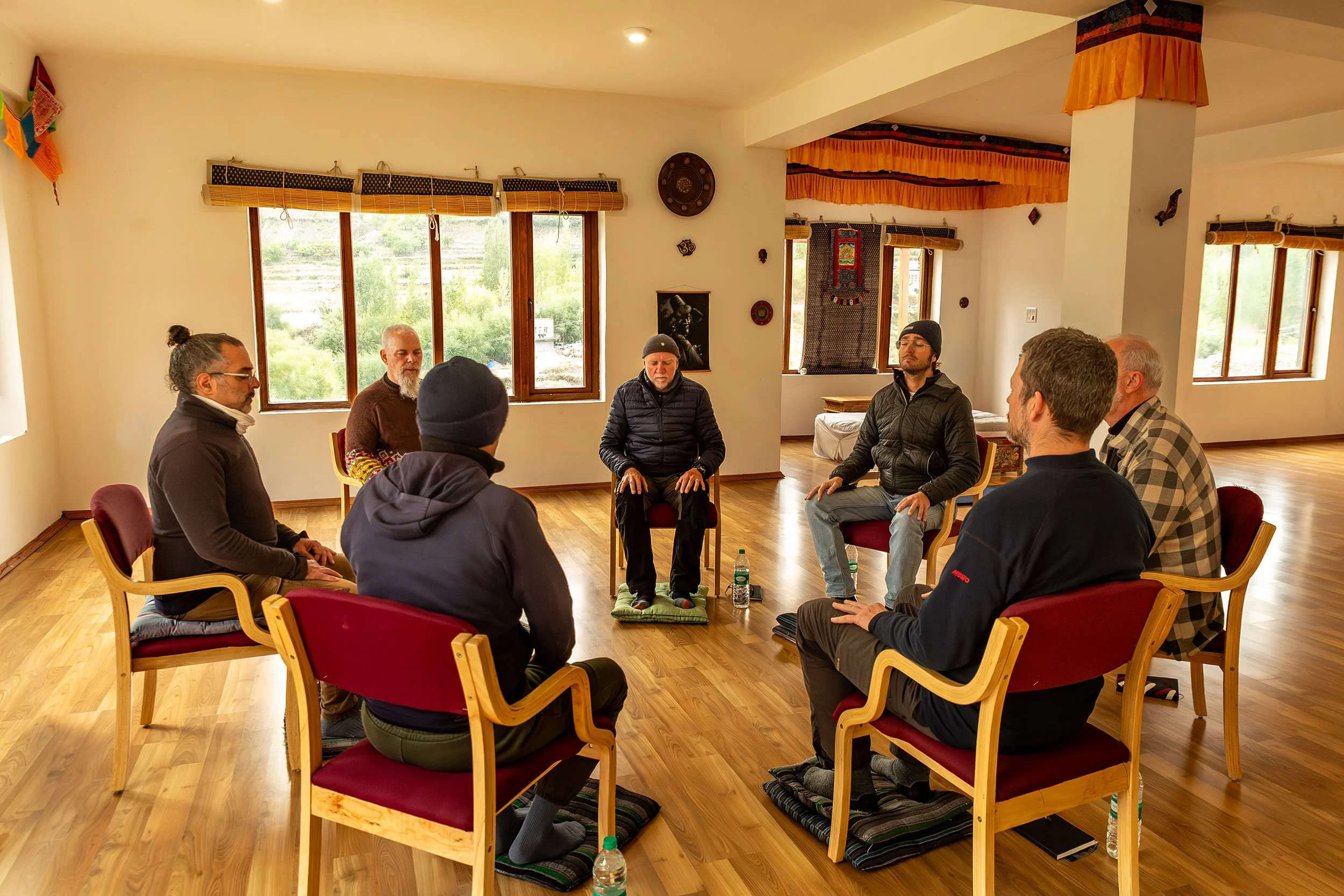
The Path Forward: Men’s Circles, Retreats, Somatic Work, Brotherhood
Men don’t heal by trying harder or carrying more alone. Many have already spent a lifetime doing exactly that: pushing through stress while burying their emotions, tightening their grip on control, convincing themselves that endurance is strength. But endurance is survival, not healing. Healing begins the moment a man steps out from behind the armour he’s been wearing for years and enters a space where he no longer has to perform, to impress, to hold everything together.
When a man finds himself among other men who recognize the weight he has carried, the pressure to be unshakeable, the silence around his struggles, the battles fought behind closed doors, something inside him softens. For the first time, he feels seen rather than judged, understood rather than evaluated. In that environment, defenses drop naturally. Breath returns. The nervous system settles. Old stories loosen their grip.
True transformation doesn’t come from isolation, it comes from deeper connection. It comes from being witnessed, supported, and challenged in healthy ways. When men sit together, speak honestly, and listen deeply, they create a kind of brotherhood that modern life rarely provides. And in that brotherhood, men rediscover their strength, not the fragile strength of holding it all in, but the steady strength that comes from being real. This is where the path forward begins: not alone, but shoulder to shoulder with other men who are also learning to be fully human, living with greater clarity, presence, and purpose.
Men’s Circles
Men’s circles are intentional gatherings where men come together to speak openly, listen deeply, and support one another without judgment or competition. They offer a rare kind of space that encourages honesty, vulnerability, and real human connection. In a world where many men feel pressure to stay strong, silent, and self-reliant, a men’s circle provides the opposite: a place to take off the mask, share what’s truly going on, and be witnessed by others who understand the same struggles. These circles are not about fixing one another or giving advice, they are about presence, brotherhood, and learning to relate from a place of truth and integrity. Ultimately, men’s circles exist to help men reconnect with themselves, with each other, and with a healthier, more grounded way of being.
Men’s Circles offer:
vulnerability without judgment
emotional expression without shame
brotherhood without competition
storytelling without fear
guidance without hierarchy
Men finally hear other men say:
“I feel that too.”
“I can relate.”
“I’ve been carrying the same thing.”
This is where transformation really begins.
Men’s Retreats
Immersion in men’s retreats is powerful in a way that everyday life rarely allows. When men step away from routine, responsibility, and the familiar patterns that keep them on autopilot, something opens. A space to breathe, to feel, to reflect, to reconnect with parts of ourselves we’ve long ignored.
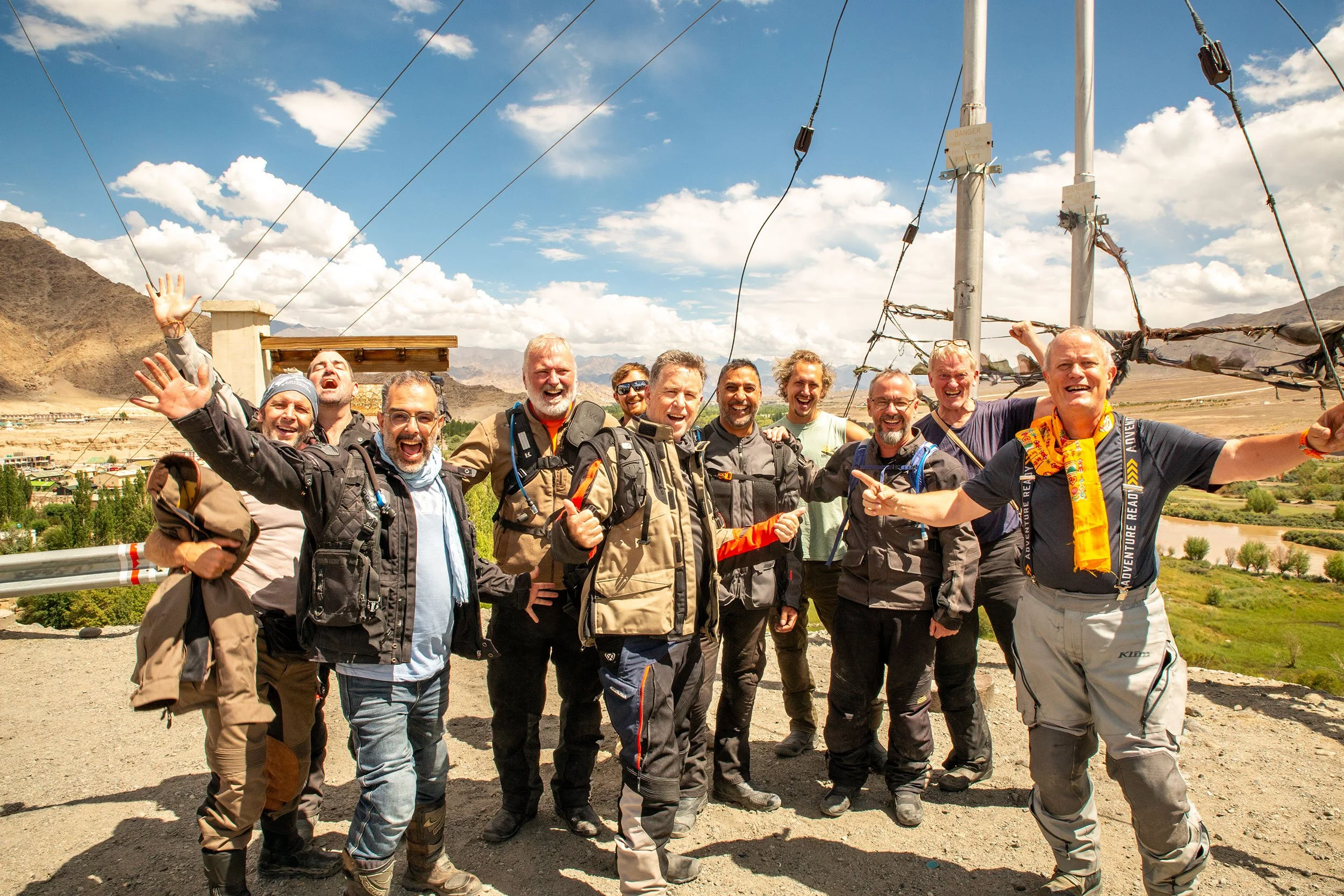
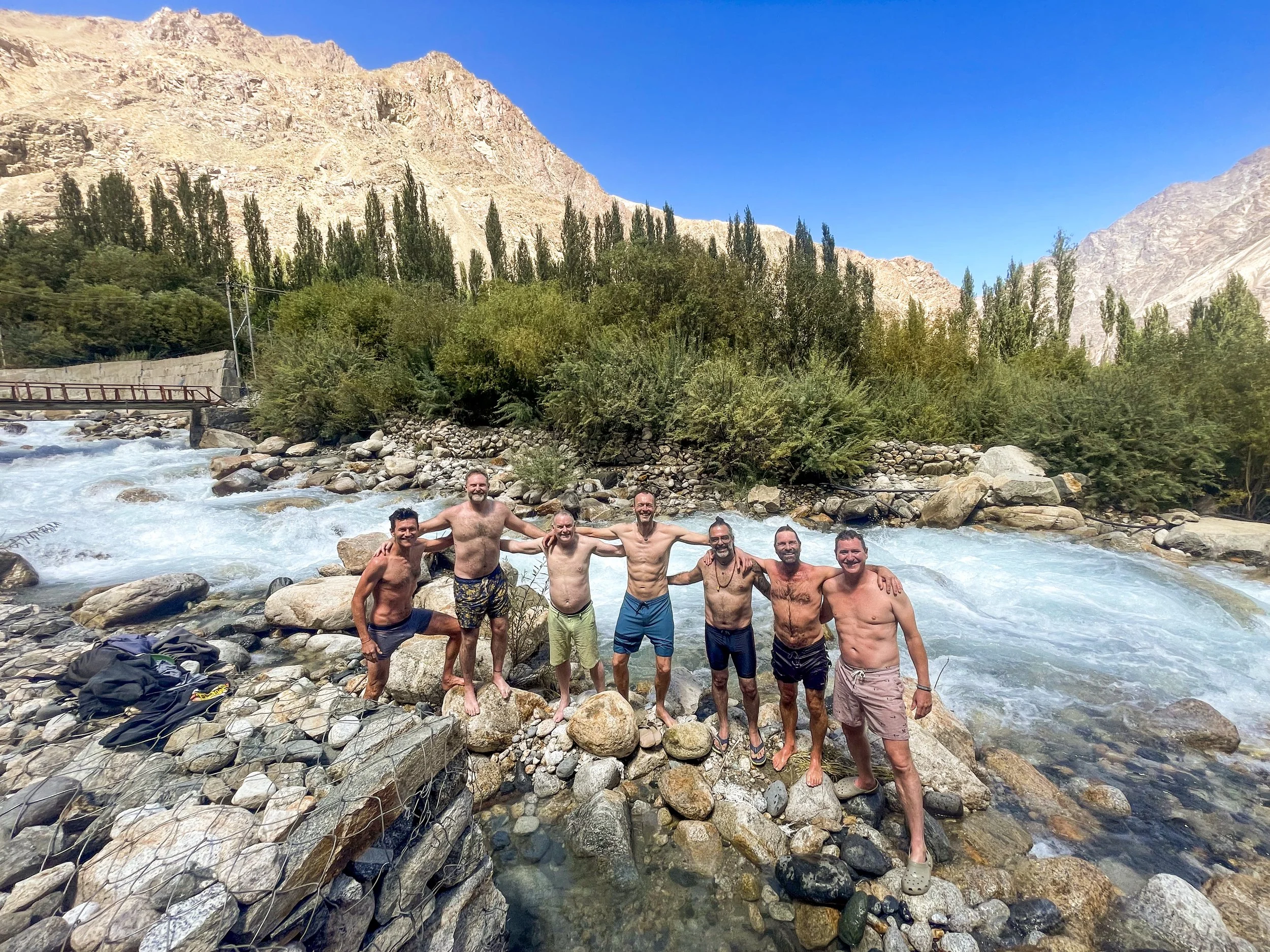
Our motorcycle journeys in the Himalayas and our men’s retreats in Thailand are designed with this intention in mind: to create environments where men can challenge themselves, ground in nature, experience brotherhood, and explore their inner world with honesty and support. These retreats aren’t an escape from life, they are a return to it in a deeper sense. They offer men the depth, presence, and clarity that only come from a conscious immersion.
Our men’s retreats act as:
modern rites of passage
embodied healing
rewilding from old conditioning
deep brotherhood
safe emotional expression
reconnection to purpose
space away from pressure
When men gather, breathe, move, share, and face challenge together, old identities dissolve and new ones emerge.

Embodied Practices and Somatic Work
Men are often just as disconnected from their physical sensations as they are from their emotions, having learned early on to push through discomfort, ignore signals, and prioritize performance over presence. Many men grew up learning to respond to physical challenges - sports, work, discipline, endurance - while receiving no guidance on how to deeply listen to their bodies, the same way they are unable to navigate their emotions.
Embodied practices such as yoga, meditation, somatic work, breathwork, and time in nature, help rebuild this lost connection. These practices invite men to slow down, feel what’s happening inside, and reconnect with the body as a source of awareness rather than just a vessel for their heads, and a tool for endurance. As men reconnect physically, they begin to access the emotions stored beneath the surface, giving them the capacity to understand themselves more fully and regulate their nervous systems in ways their old conditioning never allowed.
This makes the body a natural gateway into emotional awareness. Embodied practices provide tools to help regulate the nervous system, settle stress, and create enough internal safety for deeper emotions to surface. For men who have spent years living in their heads, staying busy, and avoiding anything that feels vulnerable, body-based practices provide a bridge back to presence and truth. They reconnect the physical, emotional, and intuitive parts of a man that rigid conditioning often separates, allowing him to feel more grounded, more centered, and more alive.
Online Men’s Courses & Community
Not every man can step away from work, family, or financial responsibility to join a retreat, and that’s okay. What matters is having an entry point, a place to begin the work of reconnecting with yourself. Online courses offer exactly that. They give men the structure, guidance, and support they need to start exploring their inner world from wherever they are, at their own pace. Whether it’s learning emotional literacy, understanding masculine patterns, or building healthier habits, an online course becomes a bridge, a first step toward greater clarity, presence, and purpose. And for many men, that first step is all it takes to begin a much deeper transformation.
Conclusion: From Rigid Roles to Living Men
Rigid masculinity norms may have helped past generations survive, but it has also limited them. The expectation to be strong, silent, and endlessly self-reliant has left countless men disconnected from themselves and from the people who care about them. Most men aren’t struggling because something is wrong with them, they’re struggling because the version of masculinity they inherited is too narrow for the complexity of contemporary life.
Healthy masculinity isn’t about being less of a man, but rather about embracing one’s full humanness. It means pairing strength with emotional awareness, independence with connection, resilience with honesty, purpose with presence. When men step into supportive environments, such as men’s circles, men’s retreats, supportive men’s groups - brotherhood - they discover that vulnerability isn’t a threat, but a source of clarity, courage, and depth. They realize they were never meant to carry everything alone.
The way forward begins when a man chooses connection over isolation and truth over performance. When a man allows himself to be seen and supported, something shifts: his relationships deepen, his inner world softens, and his purpose becomes clearer.
Every man deserves a place where he can take off the armour and breathe. When he’s given that permission, he doesn’t lose his strength: he finally learns how to fully use it.
Ready to Go Deeper?
If this article resonated with you, you are not alone. Many men feel the weight of old expectations and the desire for something deeper, more grounded, more connected. Whether you want to explore this work with a group of men or take your first steps privately, you have options:
Men’s Group
If you’re in Chiang Mai, you’re welcome to join our men’s circle at Sacred Grounds CNX, a confidential, grounded space for honest sharing, connection, and brotherhood. You don’t have to carry it alone.
Men’s Retreats
Join us for an immersive experience. We offer motorcycle journeys through the Indian Himalayas or wellness retreats in the mountains of Thailand. These are spaces to reconnect with yourself, with nature, and with a brotherhood that supports real transformation.
References
These references correspond to the specific academic studies and sources used to support research claims in this article.
Mokhwelepa, L. W. (2025). The Impact of Traditional Masculinity Norms on Men’s Willingness to Seek Mental Health Support: A Systematic Review. National Library of Medicine.
Sileo, K.M. et al. (2020). Dimensions of Masculine Norms, Depression, and Mental Health Service Utilization Among Emerging Adult Men. Journal of Men’s Health.
Galvez-Sánchez, C.M. et al. (2024). Exploring the Role of Masculinity in Male Suicide: A Review of 18 Studies. MDPI.
von Zimmermann, C. et al. (2024). Masculine Depression and Substance Use Patterns. European Archives of Psychiatry and Clinical Neuroscience.
UK Parliament Committee (2023). Written Evidence on the Role of Masculinity in Male Mental Health.
Barragan, J. (2024). Hegemonic Masculinity and Emotional Distress in College Men. SJSU ScholarWorks.
Aharon, G. et al. (2024). Adherence to Masculinity Norms and Depression, Hostility, and Help-Seeking. SAGE Journals.
Horton, E.K.J. (2026). Toxic Masculinity, Restrictive Emotionality and Mental Health Help-Seeking Intentions. Personality and Individual Differences.
Babu, A.E. et al. (2024). Traditional Masculinity Ideology and Emotional Suppression. OSF Research Archive.
APA (American Psychological Association). Guidelines for Psychological Practice with Boys and Men.
Mental Health Foundation UK (2024). Men and Mental Health Statistics.
WHO (World Health Organization). Suicide Worldwide Data.