When Providing Isn’t Enough: Redefining Men’s Purpose in an Unsteady Economy
written by Gonçalo Luz
When the Ground Beneath Men’s Lives Shifts
For generations, men were taught a simple truth: your worth is in what you provide. A stable job. A steady income. A roof overhead. Food on the table. This “provider identity” shaped male purpose for centuries. It offered structure, pride, belonging, clarity of purpose. A man knew his place in the world because his role was unmistakably clear. But the world has changed, and it changed fast. Today, men are living through one of the most unpredictable economic eras in modern history. Rising costs of living, job instability, global competition, artificial intelligence automation, industry collapse, remote work, and shifting family structures have made it harder than ever to feel financially secure. According to the OECD, over 36% of adults in advanced economies now live with high economic anxiety, and men report disproportionate stress tied to income and employment stability.
The result? A deep identity crisis. Men who were once taught that “a good man provides” now feel lost, inadequate, and ashamed when providing becomes unstable, difficult, or simply not enough. This article explores how economic turmoil reshapes a man’s sense of purpose, and how purpose can be rebuilt in a deeper, more grounded, value-based way.

The Provider Identity: A Role Built Into Male Conditioning
From a young age, whether spoken outright or absorbed quietly in the background, most men grow up with a single, powerful message: “My value comes from what I do, not from who I am.” This belief becomes the backbone of male identity, long before a boy understands its weight. He hears it in the way adults judge him if he is not tough, successful, achieving. He sees it in the roles modeled by the men around him. He learns it through society’s constant reinforcement that success, strength, and productivity are the currencies of masculinity.
Over time, this message becomes more than a lesson, it becomes a lens through which a man views himself. Achievement becomes proof of worth. Providing becomes proof of masculinity. Falling short, even temporarily, feels like a threat to identity rather than a normal part of life. Many men internalize this so deeply that they cannot separate their sense of self from their ability to produce, earn, or maintain control.
The provider identity isn’t inherently wrong, it carries values like responsibility, commitment, and care. But when it becomes the only identity available to a man, it creates a fragile foundation. Any shift in career, income, health, or life circumstance becomes more than a practical challenge, it becomes a crisis of identity.
This is the inherited blueprint countless men still live by, often without realizing its influence. And in a world where certainty is disappearing and impermanence is more visible, this narrow identity is cracking under pressure.
A man works hard.
A man provides.
A man fixes things.
A man doesn’t fall behind.
For many men, this identity felt natural. It offered direction, sometimes even a certain sense of pride. But it also created vulnerability. When purpose is tied only to productivity, income, or success, any disruption becomes existential. Job insecurity becomes personal failure. Financial stress becomes shame. Slow periods become identity collapse. The problem is not in providing. Providing is still noble. The problem is when it becomes the only definition of purpose.

A World That No Longer Matches the Old Masculinity Blueprint
The global economy of 2025 looks nothing like the economy men were raised for. Workers are more economically anxious than ever. According to the Pew Research Center, 47% of working-age men report feeling “regular financial stress,” even when employed full-time. The world men are living in today bears almost no resemblance to the world they were raised for. The rules they inherited - working hard, staying loyal to one company, earn a stable income, provide for a family, and everything will be okay, simply doesn’t match the economic reality of 2025. Industries are shifting faster than people can adapt to, whole professions are disappearing, and the idea of long-term job security has become almost utopian. Even men who work full-time, stay disciplined, and do “everything right” often feel like they’re running on a treadmill that keeps speeding up.
Economic anxiety is no longer a fringe issue, it’s the norm. According to the Pew Research Center, 47% of working-age men report experiencing regular financial stress, including many who appear stable on paper. Rising costs of living, unpredictable markets, automation, global competition, and constant change have created a climate where hard work doesn’t always translate into stability. The old masculine blueprint promised certainty and control; the new world offers neither. And this mismatch creates a deep psychological tension: men feel responsible for outcomes they can no longer reliably produce. This tension is at the core of the identity crisis so many men are quietly facing today.
Job stability is declining
OECD and ILO studies show rapidly increasing:
precarious work
contract-based roles
gig economy reliance
automation replacing traditional jobs
artificial intelligence reshaping entire industries
Men raised for linear careers now face a world that demands adaptability and emotional flexibility. Traits many were never taught.
Cost of living has outpaced wages
In many regions, real wages have stagnated while housing, healthcare, and basic expenses skyrocketed. Even men working hard feel like they’re falling behind.
Roles within families are shifting
Dual-income are now the norm in many households around the world. Women’s workforce participation is at a historic high. Traditional provider roles have been replaced by shared responsibilities.
The old masculinity blueprint simply doesn’t match the modern world. And when men cling to it, they suffer, they feel lost.

When The Provider Identity Breaks: Men and Economic Anxiety
Economic insecurity doesn’t only affect finances or strain bank accounts, it strikes at the heart of a man’s core sense of self. For generations, men were taught that their worth comes from providing, producing, being the steady force others rely on. So when income becomes unstable, when career paths shift unexpectedly, when financial pressure builds despite their best efforts, men don’t simply worry about money, they question their value as men. What begins as economic stress quickly turns into something much deeper: shame, self-doubt, and a quiet fear of not being enough.
This internal collapse is rarely spoken about. Men often carry it in silence, alone, convinced that voicing their struggle would expose weakness or failure. Instead, they work harder, isolate themselves, or bury their anxiety beneath silence, distraction, or exhaustion. But the truth is simple: when a man’s identity is tied to providing, any disruption in his ability to provide feels like an attack on his deepest sense of purpose. Economic anxiety becomes personal. And the pressure to remain strong, composed, and unaffected makes that anxiety even more difficult to bear.
Shame and Self-Blame
Men often internalize financial pressure as personal failure, even when the causes are systemic.
Burnout, Exhaustion, and Zero Space for Self
Trying to compensate, many men work harder, take on extra shifts, or grind themselves into the ground—often ignoring their health and relationships.
Emotional Withdrawal
When men feel they’re “not enough,” they often pull back emotionally, distancing themselves from partners, children, and friends.
Anxiety, Depression, and Despair
Economic pressure is one of the strongest predictors of male depression and suicidal behavior. WHO data shows a clear correlation between unemployment or unstable income and elevated male suicide risk.
Identity Collapse
When a man’s entire sense of worth is tied to providing, economic instability becomes existential.
It’s not the money itself - it’s what the money represents: identity, respect, safety, and meaning. For many men, financial stability is tied to far more than numbers on a bank statement. It symbolizes identity: the sense of being capable, dependable, and worthy. It represents respect, both self-respect and respect from others. It represents safety, the ability to protect the people they love and maintain a stable life. And at a deeper level, it represents meaning, a clear role to play in the world, a purpose rooted in contribution and responsibility. When that foundation starts to shake, it’s not just finances that feel threatened. A man’s entire inner framework, his confidence, direction, and sense of self begins to unravel. This is why economic anxiety cuts so deeply. It challenges not just a man’s circumstances, but his place in the world and the story he has been told about who he should be.
Why Purpose Cannot Be Limited to Provision
Provision matters. Responsibility matters. Commitment matters. These qualities have always been part of what makes a man trustworthy and dependable. But purpose cannot be built on a single pillar. Not in a world as complex and unpredictable as the one we live in today. When a man’s entire sense of worth rests solely on his ability to provide financially, he becomes vulnerable to forces far beyond his control: economic shifts, job markets, health issues, family changes, or simple bad luck. A single setback can shake his identity, undermine his confidence, and make him question his value as a man.
Purpose must run deeper than what a man earns. It must include who he is, how he shows up, how he loves, how he grows, how he is in service of others, how he contributes in ways that money alone cannot measure. Provision may be one expression of purpose, but it cannot be the whole story. A meaningful life requires more pillars, internal ones, that cannot be taken away by layoffs, economic dips, or changing circumstances. True purpose lives in values, presence, emotional maturity, connection, and the kind of integrity that no economy can touch.
When provision is the only role men allow themselves, they miss:
deeper meaning
internal alignment
emotional fulfillment
relational connection
community
creativity
spirituality
being in service
belonging
contribution
presence
A man’s purpose must expand into something he is, not only something he does.
Men need a purpose that can withstand:
job transitions
economic instability
aging
burnout
changing family roles
unexpected setbacks
A purpose that is internal, not dependent on external conditions, is the kind of purpose that can’t be shaken by economic shifts, job titles, or circumstances outside a man’s control. It’s a purpose built on who he is, not what he produces. When a man grounds himself in values like integrity, presence, courage, compassion, growth, and service, he creates a center of gravity that remains steady even when life becomes unpredictable. External roles may change, jobs come and go, markets rise and fall, families structures evolve, but an inner purpose rooted in character and awareness remains solid.
This kind of purpose allows a man to navigate uncertainty without losing himself. It frees him from tying his worth to productivity or income, and instead anchors him in a deeper truth: his value comes from the quality of his presence, the way he shows up for himself and others, and the meaning he cultivates from within. It’s the difference between living life in reaction to external pressures and living from an inner compass that guides him, no matter what is happening around him.

A Broader, Values-Based Definition of Purpose
A healthy sense of purpose comes from living in alignment with core values, not with outdated roles. When purpose depends solely on external expectations, it becomes fragile, easily shaken by job changes, financial pressure, or shifts in family dynamics. But when purpose is rooted in the values that define a man from the inside, his integrity, his presence, his courage, his compassion, his commitment to growth, it becomes something he carries with him wherever he goes. Values create stability in a world that offers very little of it. They give a man direction even when circumstances are uncertain, and they allow him to feel meaningful, capable, and grounded regardless of what he earns or how much he provides. A values-based purpose is about taking responsibility, anchoring identity in qualities that cannot be taken away by any economy, regime or external condition. This is the foundation of a more grounded and resilient sense of purpose.
Purpose Beyond Provision Includes:
1. Presence
Being emotionally available and grounded for yourself and others. True presence is much more than just being physically in the room. It’s showing up with full undivided attention, awareness, empathy, emotional availability. It means listening without distraction, responding without defensiveness, being grounded enough to meet life as it is, not as we wanted it to be. Presence allows a man to connect deeply with his partner, his children, his co-workers, and himself. It’s the foundation of trust and intimacy, and it cannot be outsourced, bought, or taken away.
2. Integrity
Choosing actions that match your values, even when no one is looking. Your actions must match your values, not only when life is easy, but especially when it’s difficult. It’s choosing honesty over convenience, accountability over avoidance, and truth over performance. Integrity gives a man a sense of inner strength that doesn’t depend on approval or success. It becomes a compass he can rely on when circumstances are uncertain, when life gets tough.
3. Service
Supporting loved ones not only financially, but emotionally, spiritually, and relationally. Provision is one form of service, but not the only one. Emotional support, spiritual grounding, empathy, affection, guidance, and presence are forms of service that transform relationships. When a man serves from a place of love rather than obligation, he becomes a source of stability, not just financially, but emotionally and relationally.
4. Growth
Seeking self-awareness, learning, and personal development. Growth means being willing to look inward, question old patterns, breaking unhealthy family cycles, transform from within and evolve. It’s developing emotional literacy, learning from mistakes, seeking mentors, exploring new aspects of yourself. Growth creates a sense of purpose that deepens over time, because a man who is willing to grow and evolve becomes a better partner, father, brother, and human being.
5. Community
Building real connections with men, family, and meaningful relationships. Men were never meant to walk through life alone. Community gives men a place to belong, to share their experiences, to receive support, and to offer support in return. Whether through men’s groups, men’s circles, true friendships, supportive family ties, or brotherhood, community provides meaning far beyond what individual achievement can offer. It reminds men that connection, not isolation, is where true strength lives.
6. Embodiment
Living in your body, not only in your mind, regulating emotions and nervous system. Embodiment is the practice of living in your body instead of being trapped in your thoughts all the time. It means knowing how to feel, breathe, move, and regulate your nervous system. This is not something you change overnight, but an ongoing exercise of reconnection. For men disconnected from their bodies and their emotions, embodiment becomes the bridge between the mind and the heart. Through practices like yoga, meditation, breathwork, somatic work, and simply spending time in nature, men reconnect with sensations they’ve ignored for years, creating emotional clarity and deepening resilience.
7. Courage
Facing yourself honestly, not just facing external challenges. Courage isn’t just about taking risks or facing external challenges. Real courage is internal. It’s the willingness to face your own fears, insecurities, wounds, facing the hard truth without numbing out or running away. It’s choosing vulnerability over buffering and avoidance, it’s admitting when you’re hurting, and being honest with yourself and others. This kind of courage shapes a man’s character far more than success ever will.
When a man builds his purpose on these foundations - presence, integrity, service, growth, community, embodiment, and courage - he becomes rooted in something no job title, financial fluctuation, or external circumstance can shake. This is purpose that lives within him, guiding him through uncertainty and strengthening him from the inside out.

How Men Can Rebuild Purpose in a Changing World
Rebuilding purpose in an unstable world isn’t about adopting a new role or forcing a new identity upon ourselves. It’s about peeling back the layers of unnecessary noise, forced expectations, inherited pressure, to rediscover a truer and deeper sense of self, a sense of purpose that doesn’t crumble when circumstances change or life gets harder. Today’s world requires men to anchor themselves not in rigid rolea, but in inner clarity, resilience, and deep connection. And the path toward that deeper purpose unfolds through several powerful avenues.
Through Self-Awareness
Self-awareness opens the door to deeper identity. The first step is inward. Many men have spent years, sometimes decades, defining themselves solely through action, output, and performance. So the foundational question becomes:
Who am I when I’m not producing? Who am I when I’m not performing?
These questions are uncomfortable because they reach beyond roles and into a deeper identity reflection.
Self-awareness invites a man to examine:
his beliefs
his inherited scripts
his emotional landscape
his desires
his fears
the stories he has carried for years
This inward look is not about self-criticism, it’s about self-understanding. When a man knows himself beyond what he produces, he discovers a version of purpose that is personal, durable, and meaningful.
Through Community and Brotherhood
Men cannot navigate this alone. No man can rebuild himself in isolation. Not in a healthy way. And yet, countless men try to. Society taught men to carry burdens alone, but that approach collapses under the weight of modern pressures. Spaces where brotherhood is cultivated are the antidote. Men’s groups, whether formal or informal, men’s circles, offer a rare environment where men speak honestly without fear of judgment. In these spaces, men see themselves reflected in others, their struggles, their strengths, their doubts, their hopes.
The benefits of healthy men’s groups include:
emotional safety
honest conversations
shared experience
responsibility without shame
support without comparison
belonging without performance
In these environments, men discover that their struggles are not personal defects but human experiences, and that shared vulnerability builds strength, not weakness.
Through Retreats and Immersion
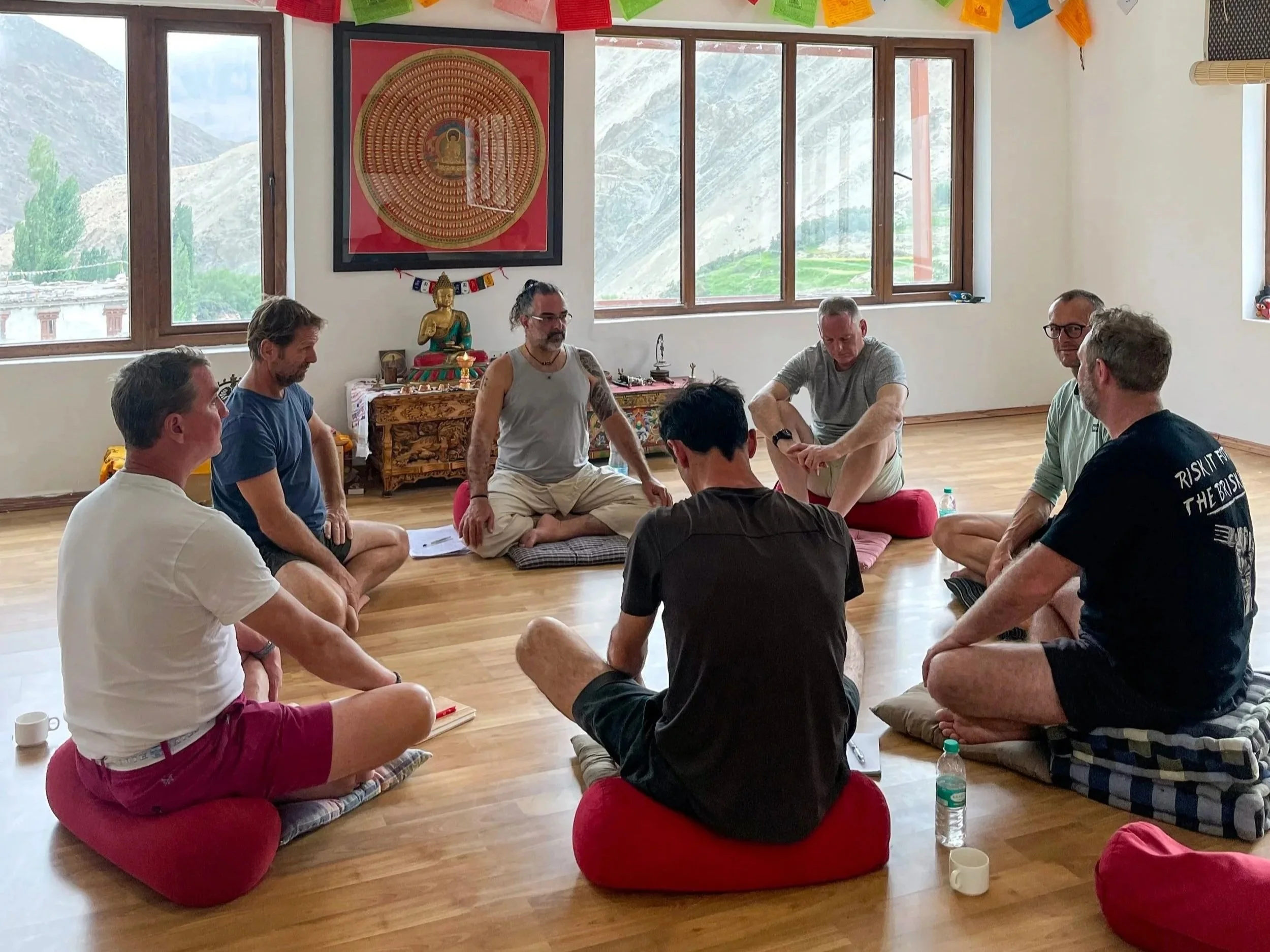
Sometimes, clarity requires distance, time alone, silence. When a man steps out of his routine, away from obligations, screens, and familiar environments, something shifts inside of him. Men’s Retreats, whether adventure-based, nature-based, or reflection-based, create spaces where men can reconnect with themselves, with nature, and with other men in a deeper way.
Immersive environments offer:
perspective away from daily responsibilities
renewed connection to the body and senses
time for introspection
physical and emotional grounding
opportunities for shared challenge and bonding
access to silence and stillness
Whether through physical challenge, time in nature, or simply stepping out of the predictable rhythms of life, immersion in a men’s retreat helps men remember what they truly need, who they truly are, are underneath the noise, the daily pressure, the stress, the routine.
Through Learning and Internal Reorientation
Not all growth and learning requires stepping away. Sometimes the shift can begin at home, by learning simple tools and practices. Online self-development courses on emotional literacy, purpose, communication, relationship skills, or masculine psychology, give men tools to understand themselves in a new light. They provide structure, frameworks, and guidance that most men never received while growing up.
These kinds of learning experiences support men in:
unpacking old beliefs
understanding emotional patterns
breaking cycles of avoidance or overwork
forming healthier habits
building internal resilience
redefining purpose from the inside out
Learning allows men to rewrite the internal operating system that has shaped their thoughts, choices, and identity.
Through A New Definition of Strength
Perhaps the most important shift a man can make is reflecting on and understanding what true strength actually means. Traditional masculinity often equated strength with perfection, stoicism, control, and performance. But in a world that demands adaptability and emotional maturity, those rigid forms of strength become brittle.
A more grounded definition of strength looks like:
presence, not pressure – being fully here instead of constantly pushing
truth, not performance – being honest rather than pretending
courage, not comparison – facing oneself rather than competing with others
clarity, not control – leading with intention rather than force
When strength becomes internal instead of performative, a man becomes resilient in ways no external identity could ever offer.
Rebuilding purpose in a changing world isn’t about abandoning responsibility, it’s about expanding it. When men cultivate self-awareness, connection, immersion, learning, and a deeper form of strength, they discover a deeper sense of purpose that is bigger than any role the world and societal pressures can ever assign to them.
A purpose built on these foundations does not depend on income, titles, or external validation. It grows from within, it endures uncertainty, it aligns a man with who he truly is. This is purpose that no economy, circumstance, or expectation can take away.
When Providing Isn’t Enough
The world has changed, and men are being invited, perhaps for the very first time in history, to change with it in ways they never did before. Economic instability is real. The anxiety many men feel is real. But moments like this, when the old structures no longer hold, are also moments of profound opportunity. They ask men to look inward, to question inherited roles, to rebuild purpose on foundations that cannot be shaken by circumstances.
Throughout the history of humanity, a man’s worth has been measured by his ability to provide, his productivity, and more recently his paycheque and the steadiness of his labor. But a man is far more than what he earns. His purpose is not limited to providing, and his identity is surely not defined by output or performance. True purpose begins when a man starts living from who he is, rather than from what he produces. It grows when he allows himself to evolve, to question, to feel, to connect, and to lead himself from the inside out.
When men expand their sense of purpose beyond provision, they begin to uncover qualities that were often buried beneath pressure and expectation:
Presence that brings calm to relationships and clarity to decisions.
Meaning that survives the changing tides of work and circumstance.
Connection that fills the loneliness many men quietly carry.
Direction that comes from within, not from societal demands.
A sense of self that remains steady, regardless of external shifts.
This is the deeper work of modern masculinity: reclaiming a deeper and truer sense of purpose that is internal, grounded, and aligned with who a man truly is. A purpose that no economy can grant and no economy can take away. And while the journey is personal, it is not meant to be walked alone. Men grow through connection, community, brotherhood, through honest conversations, through spaces where they no longer have to pretend or perform. In connection, men rediscover themselves, and in rediscovering themselves, they rediscover their purpose.
This is the path forward. Not perfection. Not performance. But presence, integrity, courage, and a purpose rooted in the heart of who a man is becoming.
If this article resonated, and you feel the pull to go deeper, you don’t have to do it alone.
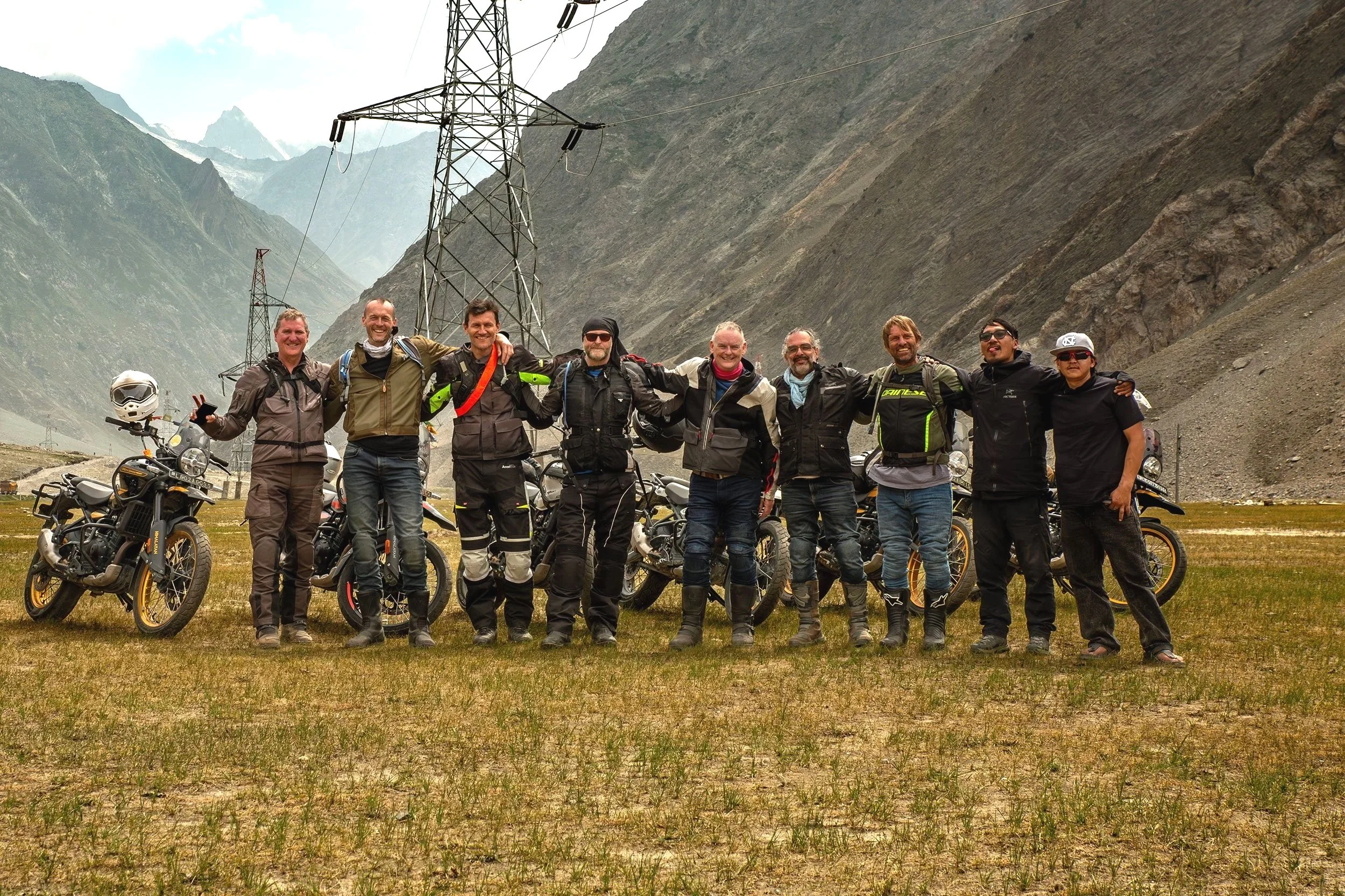
For some men, a men’s retreat offers the environment they need - stillness, nature, and honest connection with other men.

For others, the right beginning is quieter: the Grounded Man online course, a structured doorway into emotional strength, clarity, and grounded purpose.
References
Economic & Labor Data
OECD (2023). Employment Outlook.
ILO (International Labour Organization).
World Employment and Social Outlook.
Pew Research Center (2023–2024).
Economic Anxiety & Financial Stress Studies. World Bank (2023).
Global Economic Prospects.
Mental Health & Identity
WHO (World Health Organization). Mental Health and Suicide Statistics.
APA (American Psychological Association). Guidelines for Psychological Practice with Boys and Men.
Stanford Center on Poverty & Inequality (2022). Economic stress and mental health correlations.
Masculinity & Purpose Literature
Way, N. (2018). Deep Secrets: Boys’ Friendships and the Crisis of Connection.
Mahalik, J.R. et al. (2022). Traditional Masculinity and Mental Health Outcomes.
Courtenay, W. (2021). Dying to Be Men: Psychosocial, Environmental, and Biobehavioral Directions in Promoting the Health of Men and Boys.